From Sending Money to Everyday Payments: The Next Chapter for Remittances August 20, 2026
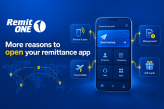
Imagine if customers opened your app for more than just sending money?
The remittance app is starting to become more than a place to make a transfer. As customers look to manage more of their financial needs in one place, providers have an opportunity to build more value around the transaction.
47% of consumers prioritised having a single platform to manage their financial services. The market is already responding. Remitly, for example, has introduced a Global Card that brings sending, spending, saving, receiving and getting paid together within one account.
For remittance providers, this shift creates a bigger commercial question: how do you make the app useful between transfers?
Adding relevant services can help providers:
- Generate revenue beyond the transfer
- Increase the value of each customer relationship
- Give customers more reasons to return
- Differentiate their proposition as transfer pricing becomes harder to compete on
So what does this look like in practice, and where should an MSB start?
What Makes a Money Transfer App a Payments App?
Value-added services can extend the role of a Money Service Business (MSB) beyond the transfer itself, creating additional revenue opportunities. Rather than building an entirely new product, operators can add services that fit naturally around their customers’ financial needs.
Here are some high-demand examples:
- Airtime and data top-ups sent directly to recipients, making it easier to support family and friends abroad
- eSIMs, particularly ideal for travel season or customers who travel frequently throughout the year.
- Utility and government bill payments, including electricity, water and loans, helping customers support their loved ones’ regular expenses across borders
- Gift/prepaid cards can load funds to spend across major retailers in sender or recipient countries, giving customers another way to send value
Together, these services help MSBs become less reliant on transfers, increase their customers’ lifetime value, and achieve healthier margins.
How Should Money Transfer Apps Adapt to Customer Behaviour?
Features alone don’t make an app feel like a payments platform; the interface does.
Leading with a balance and wallet view is what gives it that everyday, mini-bank feel.
Features alone don’t make an app feel like a payments platform. The experience does. A balance and wallet-led interface can make the app feel more like an everyday financial tool than somewhere customers only visit to send money.
One operator we work with, expanding its UK-to-Africa corridor, asked for exactly this: an interface where the receiver’s popular transfer method – wallet, to be the default transfer method instead of bank transfer to improve customer convenience and push more transactions.
Which Value-Added Services Would Work for You?
What works will depend on your corridors, customer behaviour and existing proposition. The better approach is to identify what your customers already need, connect it to your existing offering and build from there.
That could mean introducing eSIMs for customers who regularly travel internationally, bill payment for customers supporting family overseas, or gift cards for customers looking for convenient ways to spend.
Starting with one or two relevant services allows you to test demand, learn what customers use and build from evidence. It also limits the investment required before a new service has proven its value.
For example, in one modelled scenario, a gift card service introduced to a 50,000-customer base with 15% adoption generated an estimated £56,000 in annual revenue from that service alone.
You can see your own revenue potential through RemitONE’s free estimator tool: https://growth.remitone.com
Where to Get Started
Moving towards an everyday payments proposition does not have to mean rebuilding your entire platform.
Start with the customer. Look at how they use your service today, where demand is strongest and what they are already doing outside your platform.
From there, identify one or two services that make sense for your customers and corridors. Test them, measure adoption and expand based on what you learn.
The same applies to the app experience. If customers in one corridor behave differently from customers in another, your interface should be able to reflect that.
RemitONE supports both sides of this approach, from value-added services such as eSIMs, gift cards and bill payments to a customisable interface that can be configured around different corridors.
If you’re exploring what an everyday payments app could look like for your business, talk to our team. We’ll share what we’re seeing across the market and explore what makes sense based on your model and customers.
FAQ
What is an everyday payments app?
It is a shift from an app built primarily for sending money abroad to a platform customers can use more regularly for services such as receiving funds, wallet transfers, bill payments, top-ups and other value-added services alongside remittances.
Why are money transfer companies adding more payment services?
Customers are increasingly looking for more of their financial services in one place. Adding relevant services can make an app more useful between transfers, increase engagement and create additional revenue opportunities.
What value-added services can money transfer businesses offer?
Value-added services are additional products and services offered alongside the core money transfer experience. These can include eSIMs, gift cards, subscriptions, bill payments, utility top-ups and other services that give customers more reasons to use the platform beyond sending money.
Related Posts
-

Ep 11: Stablecoin Settlement for Remittance Providers: Can It Reduce Prefunding, Costs and Friction?
Could stablecoins help Money Transfer Operators (MTOs) move value between partners 24/7, without relying on the same funding model? …
October 14, 2026 -

Remittance Platform vs Cross-Border Payment Infrastructure: What Does Your Business Actually Need?
When choosing how to manage and deliver cross-border payments, it can be difficult to know whether you need a…
October 14, 2026 -

RemitONE Partners with Prime Remit Transfers Limited to Expand Payout Network in Uganda
Expanding into a new corridor usually means months of negotiating local connections, vetting partners and building integrations. A new…
October 14, 2026 -

One Payout Partner. More Ways to Reach Africa.
What if expanding your African payout coverage didn’t mean building a new network in every market? For money transfer…
August 20, 2026 -

Episode 10: The New Rules of Cross-Border Payments
Over the past year, we’ve spoken to operators, technology leaders and payments experts about what’s changing in cross-border payments. …
August 18, 2026 -

How MTOs Can Improve Margins: 3 Practical Strategies | Webinar
Growing transaction volumes doesn’t always mean growing profits. In this webinar, we explore three practical strategies that help MTOs recover hidden…
July 21, 2026
